.jpg&w=1920&q=75)
Inside the ChatGPT App Revolution: Brand-Built Apps and the Capabilities They Enable
26 December 2025
To date ChatGPT has been something people used to ask questions, generate ideas or speed up everyday tasks.
That's no longer going to be the full picture.
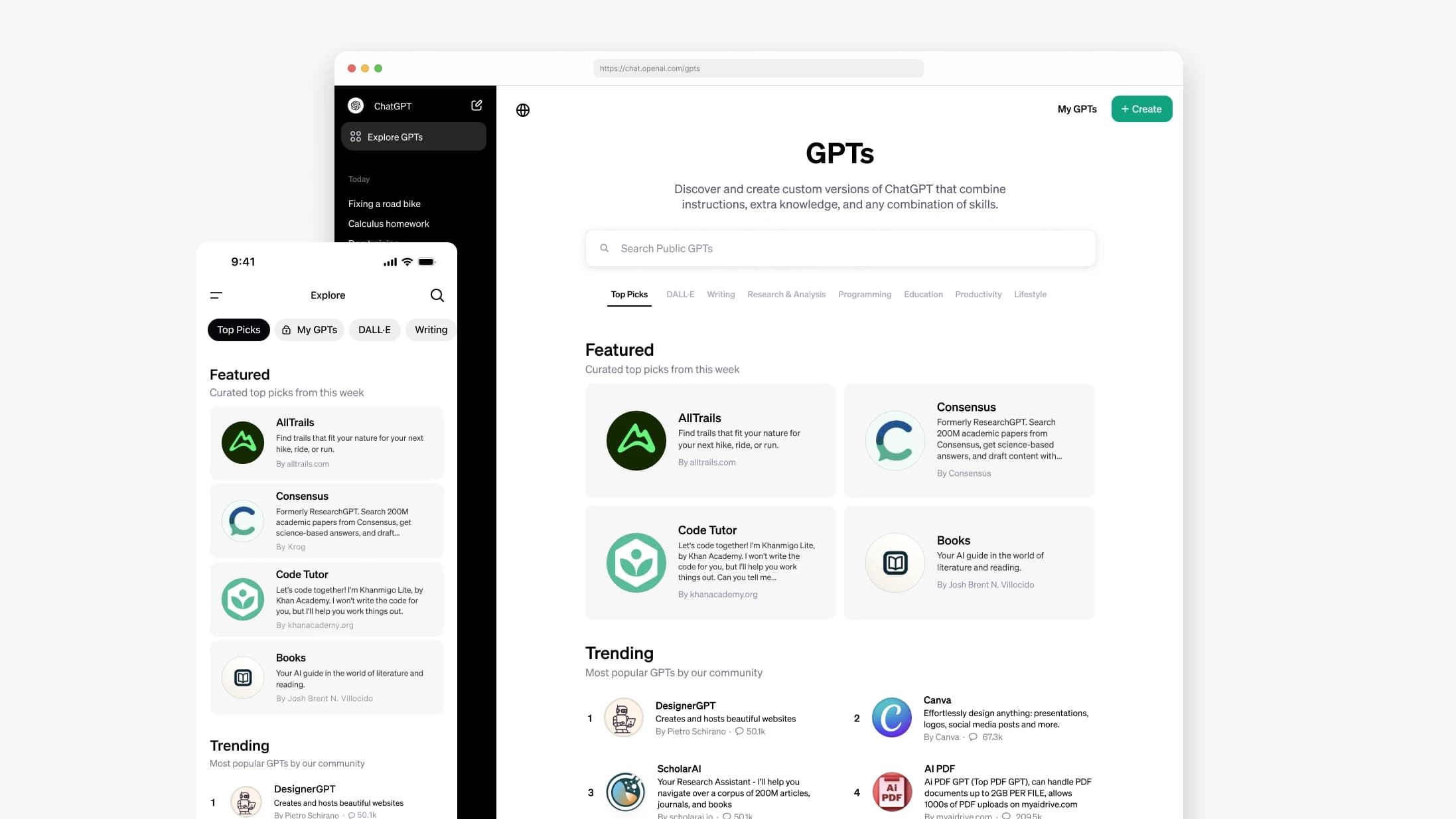
With the launch of the ChatGPT app store, brands are now able to build fully functioning apps that live inside ChatGPT itself. Not plugins. Not experiments. Real products that users can discover, interact with and take action on without ever leaving the conversation.
This marks a shift. ChatGPT is becoming a platform and brands who understand this early are unlocking entirely new capabilities.
In this article, we've explored real examples of brands who have already built ChatGPT apps and what those integrations now allow them to do.
Spotify. Turning conversation into music discovery
Spotify was one of the earliest brands to show what a ChatGPT app could really unlock.
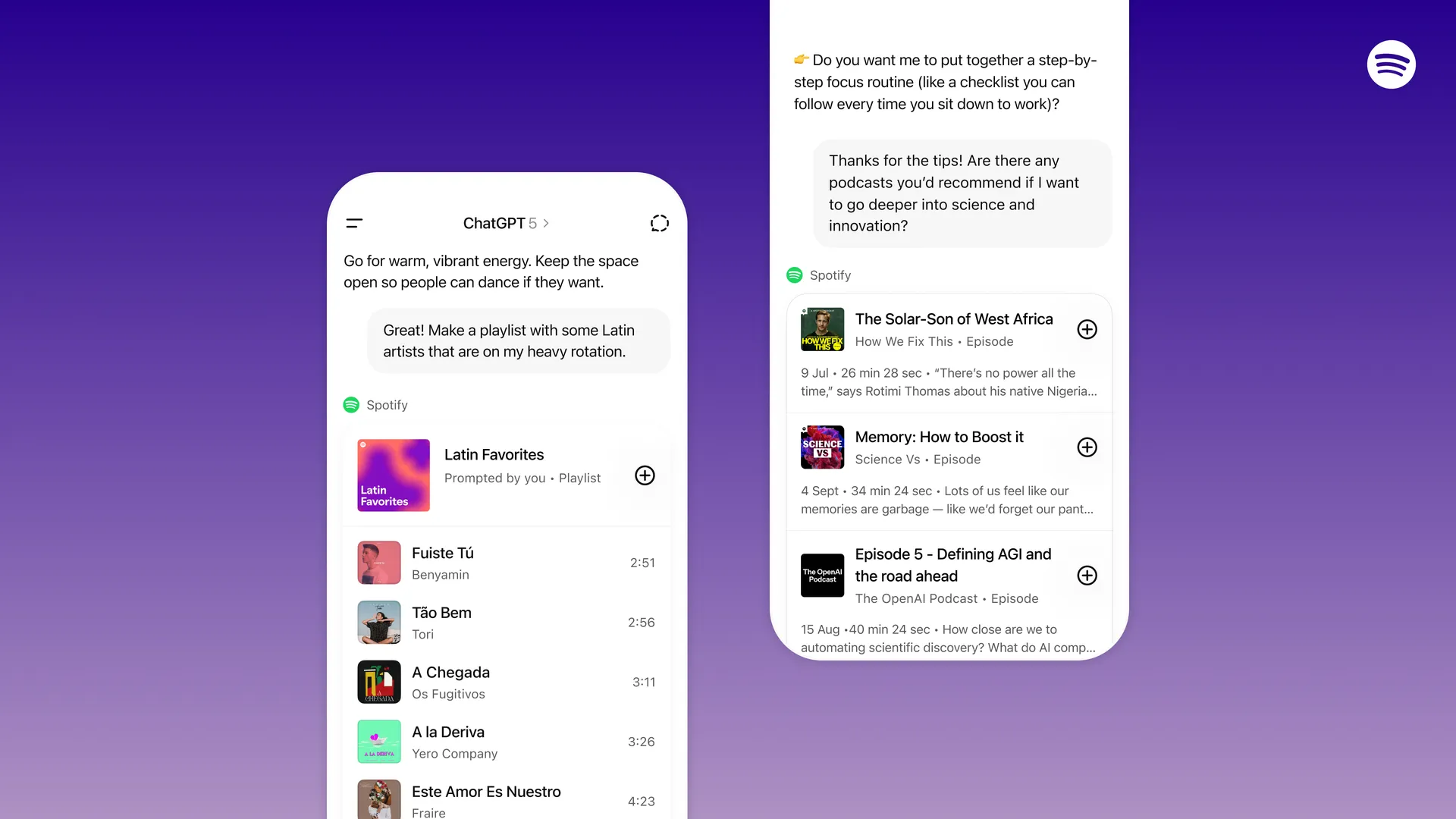
What the app does Inside ChatGPT, users can ask Spotify to create playlists, suggest tracks or explore music based on mood, activity or context.
You can type something as simple as Create a playlist for a morning run or Suggest chilled music for a dinner party. Spotify responds instantly with curated results that can be saved and played.
What capability does this unlock?
Spotify has effectively moved music discovery into natural conversation. Instead of searching, filtering or browsing inside a traditional interface, users describe how they feel or what they need. Spotify handles the rest. This removes friction and increases engagement. It also exposes Spotify to moments where users might not have opened the app at all.
"Brands are no longer waiting to be searched for. It is present where intent begins."
Charlie Hartley - Founder of Show + Tell
Canva. Design execution without the blank page.
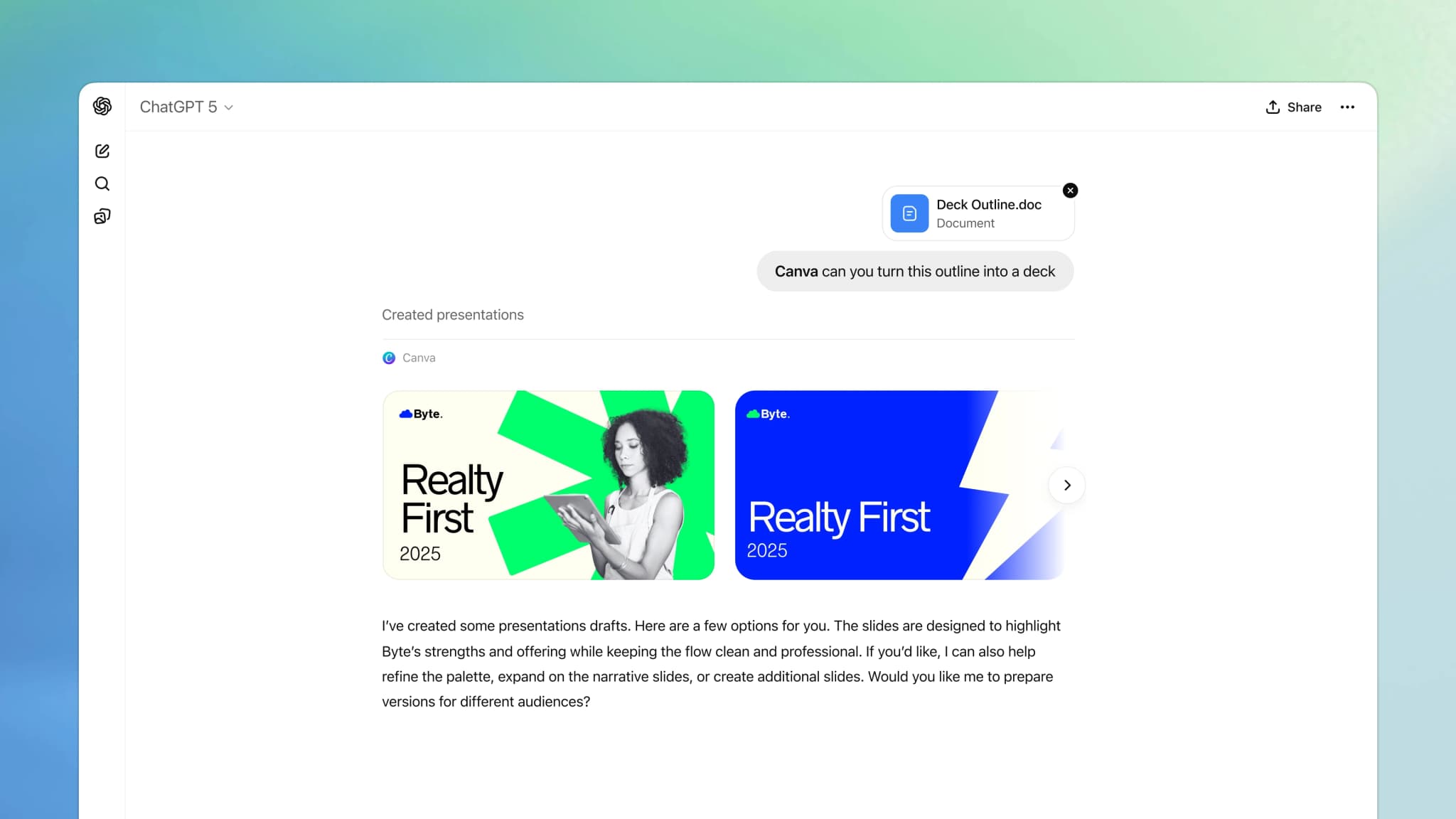
Canva has built a ChatGPT app that brings design directly into the chat. It enables users to ask Canva to create designs using natural language. For example:
- Create a social post for a summer sale
- Design a poster for a community event
- ChatGPT then opens Canva with a generated design ready to edit.
This eliminates one of the biggest barriers in design. Starting.
By meeting users in conversation, Canva allows ideas to become visual output instantly. This is especially powerful for non designers who struggle with blank pages and decision paralysis.
It speeds up workflows for teams who just want something usable and quickly. The integration turns ChatGPT into the front door and Canva simply as as the execution tool behind it.
Zillow. Property search through conversation
Zillow has brought property discovery into ChatGPT.
It enables users to ask Zillow questions like:
- Show me two bedroom flats in Manchester under four hundred thousand pounds
- What homes are available near good schools
Results appear inside the conversation with listings, prices and locations. Zillow has transformed a complex search experience into a guided conversation.
Instead of filling out forms and refining filters manually, users explore property options through follow up questions. Each response becomes more tailored and relevant. This makes property search feel less transactional and more human. It also keeps users engaged for longer because the process feels easier and more intuitive.
Instacart. From meal planning to checkout in one flow
Instacart has gone a step further by enabling full transactions inside ChatGPT. They have enabled users to ask ChatGPT to plan meals, suggest recipes or build a grocery list. Instacart then creates a shopping basket using local store inventory.
Users can complete checkout without leaving the chat.
This is not just discovery. It is completion. Instacart has connected intention directly to action. From idea to purchase in a single conversational flow.
For the user, this removes friction and saves time. For the brand, it shortens the journey to conversion and captures demand at the moment it appears.
This is a glimpse of what conversational commerce can become.
Travel brands. Planning by talking not searching.
Travel platforms like Booking and Expedia have also built ChatGPT apps.
Rather than bouncing between tabs and comparison sites, users stay in one place. Questions lead naturally to better recommendations. For travel brands, this means they are part of the planning journey earlier and more often. Not just at the point of booking.
Our final thoughts:
What all of these brands understand is that he same principles apply. Conversation is the new interface. Users no longer need to learn how a product works. They just explain what they want and the action lives where intent starts.
Platforms are shifting ChatGPT is not replacing apps. It is becoming the layer that connects them.
For brands, this creates a new distribution channel and a new way to deliver value. This is not about rushing to build an app for the sake of it. The real opportunity is understanding what your brand does best and how that capability could be exposed through conversation.
That might be:
- Personalised recommendations
- Instant setup or configuration
- Guided decision making
- Content creation
- Commerce or booking
The brands winning early are not shouting the loudest. They are quietly removing friction.
The question worth asking:
"If your customers could talk to your product, what would they ask it to do?"
That question will shape the next generation of digital experiences.